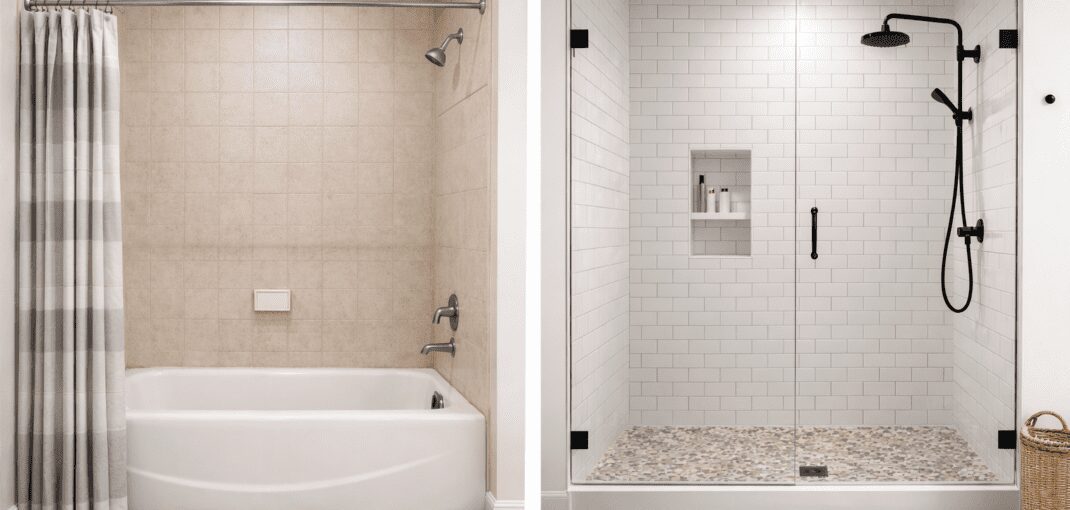
One of the most common decisions in a bathroom remodel is whether to keep a bathtub, replace it with a new tub, or convert the space into a walk-in shower. For many Marin County homeowners, this choice comes up when an older tub-and-shower combination starts to feel dated, difficult to clean, or inconvenient to use.
A walk-in shower can make a bathroom feel larger, more modern, and easier to access. A bathtub, on the other hand, may still be important for children, guests, resale value, or personal preference. The right answer depends on how the bathroom is used, who uses it, and what the long-term goals are for the home.
Why Many Homeowners Are Choosing Walk-In Showers
Walk-in showers have become popular because they are practical, attractive, and easier to use on a daily basis. Instead of stepping over a high tub wall, the user can enter the shower more comfortably. This is especially helpful for older adults, people with mobility concerns, or anyone who simply wants a safer and more convenient bathroom.
A walk-in shower can also make a bathroom feel more open. Clear glass, lighter tile, and a lower shower entry can visually expand the room. In smaller bathrooms, converting a tub to a shower may help the space feel less crowded and more comfortable.
For homeowners who rarely take baths, a walk-in shower often makes better use of the available space.
When Keeping or Replacing a Tub Makes Sense
Even though walk-in showers are popular, removing every bathtub from a home is not always the best choice. If the home has young children, a bathtub may still be very useful. Families often prefer at least one tub in the house for bathing children, pets, or for occasional soaking.
A tub may also matter for resale depending on the type of home and likely future buyers. In a family-oriented home, buyers may expect at least one bathroom with a bathtub. That does not mean every bathroom needs a tub, but it is worth thinking carefully before removing the only one.
If the existing tub is in poor condition but the layout still works, replacing it with a newer tub-and-shower combination may be a practical solution.
Consider Who Uses the Bathroom
The best decision starts with how the bathroom is actually used. A guest bathroom, children’s bathroom, hall bathroom, and primary bathroom may each have different needs.
In a primary bathroom, many homeowners prefer a larger walk-in shower because it is used every day. Comfort, lighting, storage, and ease of cleaning become more important than having a tub.
In a hall bathroom used by children or guests, keeping a bathtub may be more practical. In an older adult’s bathroom, a walk-in shower with easier access may be the safer and more comfortable choice.
Before deciding, ask whether the current bathroom is serving the people who use it now and whether it will still work well five or ten years from now.
Accessibility and Long-Term Use
A tub can become harder to use over time because stepping over the side requires balance and leg strength. For homeowners who are planning to stay in their homes long-term, a walk-in shower may be a smart aging-in-place improvement.
A walk-in shower can include features such as a low threshold, built-in bench, handheld showerhead, grab bars, slip-resistant flooring, and better lighting. These features can make the shower safer without making the bathroom look clinical or institutional.
When planned well, an accessible shower can still look modern, warm, and high-end.
Space and Layout Considerations
Not every bathroom layout is ideal for every option. Some tub-to-shower conversions are straightforward because the new shower can fit where the old tub was. Other bathrooms may require more planning, especially if the homeowner wants a larger shower, custom glass, added storage, or a different layout.
A standard tub area can often become a comfortable shower, but the details matter. Drain location, waterproofing, wall condition, plumbing access, ventilation, and tile layout all affect the final result.
In smaller Marin County bathrooms, a walk-in shower with glass can help the room feel brighter and more open. In larger bathrooms, a separate tub and shower may be possible if the layout allows it.
Cleaning and Maintenance
Walk-in showers are often easier to use, but they still need to be designed with cleaning in mind. Large-format tile, properly sloped floors, quality grout, good ventilation, and simple glass design can all make maintenance easier.
A tub-and-shower combination may be practical, but older tubs often have stained surfaces, worn caulking, damaged tile, or hard-to-clean tracks and corners. If the tub area has recurring moisture problems, it may be time to rebuild the space properly rather than simply replacing fixtures.
The goal is not just to make the bathroom look new. The goal is to create a bathroom that stays clean, dry, and functional over time.
Waterproofing Matters More Than the Surface Finish
Whether you choose a walk-in shower or a new tub, waterproofing is one of the most important parts of the remodel. Bathrooms deal with daily water exposure, and poor waterproofing can lead to hidden damage behind walls or under flooring.
A beautiful shower is only as good as the preparation underneath it. Proper waterproofing, correct slope, quality installation, and good ventilation help protect the home and reduce the risk of future problems.
This is especially important in older homes where previous remodels may not have been done correctly.
What About Home Value?
A well-designed bathroom remodel can make a home more attractive, but value depends on making the right choice for the home. A walk-in shower can be a strong selling point, especially in a primary bathroom. It can make the space feel updated, comfortable, and easier to use.
At the same time, keeping at least one bathtub in the home may be important for some buyers. If the house already has another bathroom with a tub, converting one tub to a walk-in shower is usually an easier decision.
The safest approach is to think about both daily use and future resale. The bathroom should work well for the homeowner now while still making sense for the type of home and neighborhood.
Design Options for a Walk-In Shower
A walk-in shower can be simple or highly customized. Some homeowners prefer a clean, practical design with neutral tile and glass. Others want a more luxurious shower with a bench, niche, rainfall showerhead, handheld fixture, custom tile, and frameless glass.
The design should match the rest of the home. A bathroom in a classic Marin County home may call for warm, timeless finishes, while a newer or more modern home may support a cleaner contemporary look.
Good design is not just about choosing attractive materials. It is about making sure the shower is comfortable, easy to use, properly lit, and built to last.
Final Thoughts
Choosing between a walk-in shower and a tub replacement depends on how the bathroom is used, who uses it, and what the homeowner wants from the remodel. A walk-in shower may be the right choice for better access, easier daily use, and a more open modern feel. A bathtub may still be the better choice for families, guests, or homes where it is important to keep at least one tub.
For many Marin County homeowners, the best solution is to convert one bathroom to a walk-in shower while keeping a bathtub elsewhere in the home. That balance can improve daily comfort without giving up practical flexibility.
Bay Area Bathroom Remodeling helps homeowners evaluate the layout, condition, and long-term use of their bathroom before making a decision. Whether you are considering a tub replacement, a tub-to-shower conversion, or a full bathroom remodel, the right plan can make the space safer, more beautiful, and easier to use every day.